Net Zero Emissions Target
2023
Baseline
2023
Target
2030
Calculation of emission scope based on percentage in 2023
Total carbon footprint
44.03 tCO2e
Reduction Initiatives
44.03 tCO2e
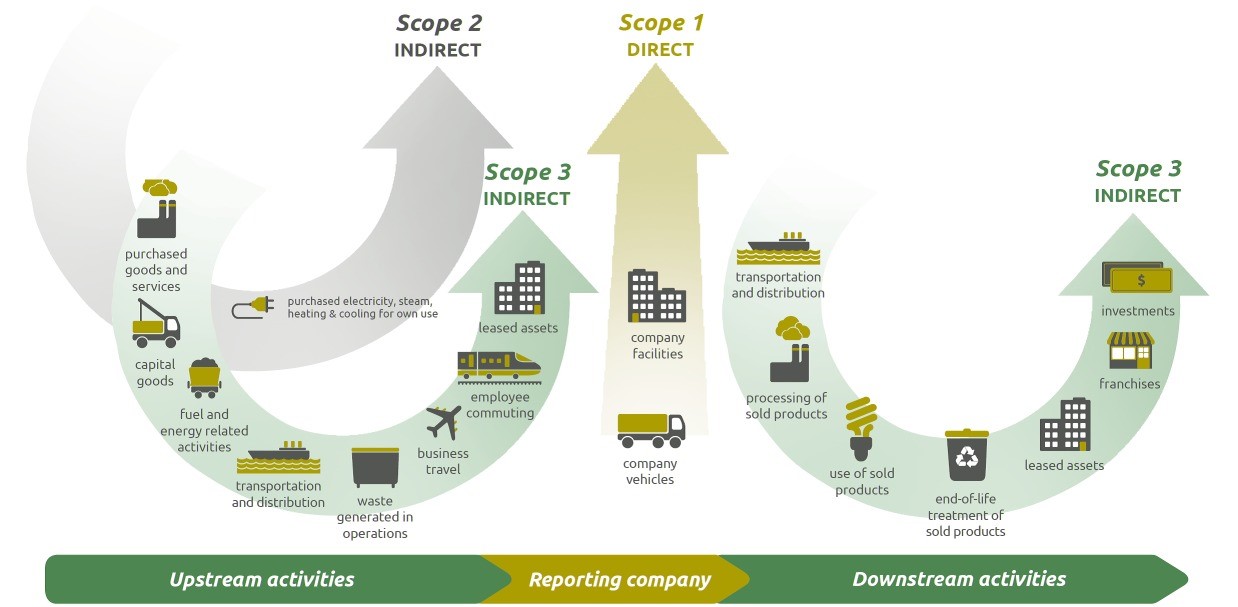
Emission Scope 1
5.44 tCO2e
Emission Scope 2

11.59 tCO2e
Emission Scope 3
27.00 tCO2e
Total Carbon emissions in 2023
Understanding Our Carbon Footprint in 2023
PT BATS International has identified its carbon footprint hotspots for the year 2023, which primarily stem from employee commuting and business travel. In an effort to reduce these emissions, the company has implemented several initiatives. For long-distance travel and journeys outside Java Island, the company has committed to using buses or ferries, opting for non-air travel modes to lessen its environmental impact. Within Java Island, travel is facilitated through the use of two company-owned vehicles.
To further mitigate its carbon footprint, PT BATS International has taken a significant step by transitioning to biodiesel for these vehicles, moving away from conventional gasoline. This shift not only underscores the company's dedication to sustainable practices but also aligns with broader environmental goals by reducing reliance on fossil fuels and lowering greenhouse gas emissions. Through these measures, PT BATS International demonstrates its commitment to sustainability and its proactive approach to minimizing its carbon footprint.
Total Emission Scope 1 - Mobile combustion + Fugitive emissions from air-conditioning
5.44 tCO2e

Scope 1 - Mobile combustion 4.08 tCO2e
The assessment of mobile combustion encompasses an in-depth analysis of the quantity of fuel consumed by BATS on its two company owned vehicles. This evaluation takes account of fuel consumption patterns, vehicle types, distances traveled, and fuel efficiency metrics.
Scope 1 - Fugitive emissions from air-conditioning 1.36 tCO2e
In our fugitive emissions, the source is from our five air conditioning units strategically positioned at the BATS office. Our air conditioning units uses R-32 as its refrigerant and is required a regular maintenance every four months.
Total Scope 2 - Purchased electricity - location based
11.59 tCO2e
The Scope 2 emissions is for the purchased electricity, specifically focusing on the origin of power consumed at the BATS office. This comprehensive evaluation centers around the kilowatt-hours (kWh) of electricity sourced from PLN's Jamali Power Plant. The examination not only encompasses the quantification of power consumption but also incorporates the associated emission factors, expressed as 0.800 (Kg/ton CO2e).
Total Scope 3 - Purchased goods and services + Waste generated in operations + Business Travel + Employee Commuting
27.00 tCO2e

Scope 3 - Purchased goods and services 14.72 tCO2e
The acquisition of Goods and Services includes the procurement of paper, lunches, and beverages during regular working days at the BATS office. This encompasses essential elements contributing to our daily operations and sustainability efforts.

Scope 3 - Waste generated in operations 0.23 tCO2e
Operational Waste Generation is attributed to paper waste and household garbage within BATS operations. We actively seek eco-friendly waste management practices to minimize our environmental impact and promote sustainability.

Scope 3 - Business Travel 6.33 tCO2e
Business Travel expenses originate from BATS business trips, excluding office-owned vehicles. Modes of transportation encompass buses, trains, planes, and rental vehicles, contributing to our commitment to efficient and responsible travel practices.

Scope 3 - Employee Commuting 5.72 tCO2e
Employee Commuting stems from the daily journeys of employees to the BATS office, utilizing their own vehicles or public transportation. Encouraging sustainable commuting options aligns with our dedication to reducing the environmental impact of daily commutes.